Why Casual Gamers Are Important to the Gaming Industry
Casual gamers do not always get the respect they deserve, but they are a major part of what keeps the gaming industry growing. From sports games and shooters to mobile titles, casual players consistently support the games they enjoy without worrying about console wars, exclusivity, or being considered a "hardcore gamer."
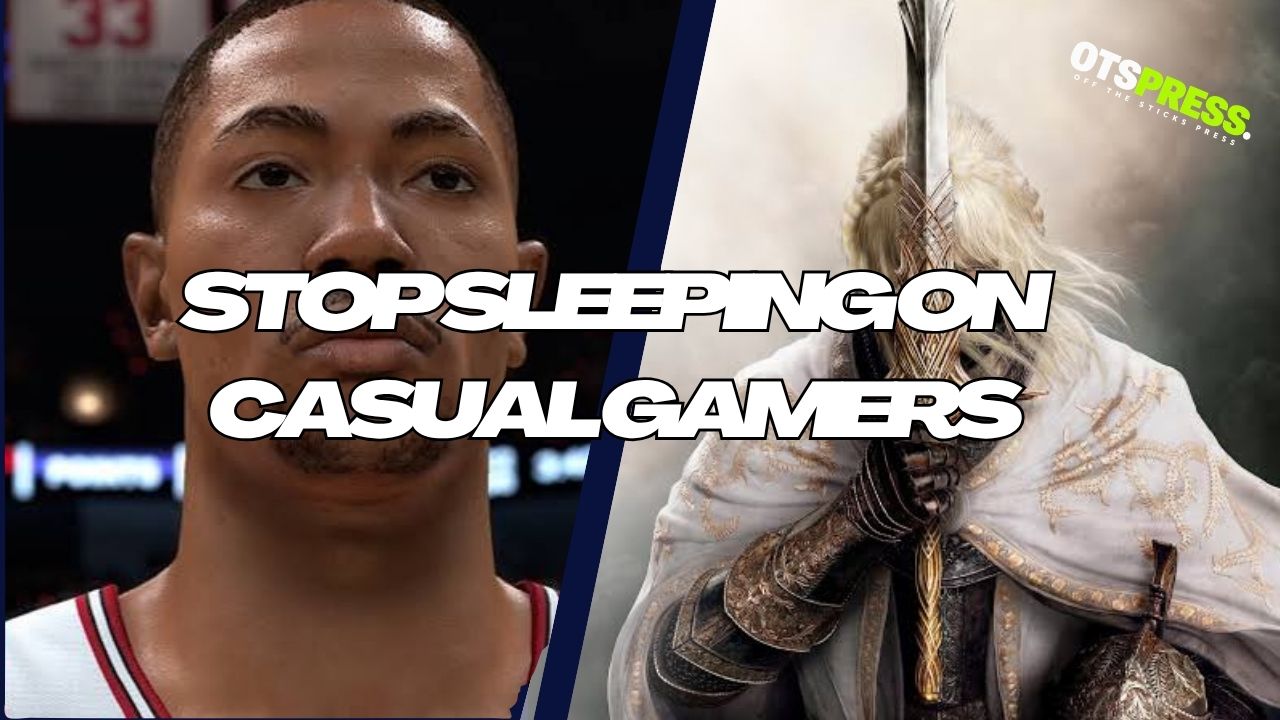
Casual gamers sometimes get dismissed by the more dedicated side of the gaming community, but the industry would look very different without them.
When people think about the gaming industry, the loudest voices usually come from the most dedicated players. These are the people following every showcase, debating console sales, arguing over exclusives, analyzing frame rates, spending hundreds of hours in RPGs, and keeping up with nearly everything happening in gaming.
But there is another group that does not get nearly enough credit.
The casual gamer.
Casual gamers might not know every studio acquisition. They might not watch every PlayStation State of Play, Xbox Games Showcase, or Nintendo Direct. They may not care which console has the highest teraflop count, and they probably are not spending their afternoon arguing about whether PlayStation or Xbox "won" the generation.
What they do, however, is play games.
And they do it in massive numbers.
According to the Entertainment Software Association's 2025 Essential Facts report, more than 205 million Americans play video games, including people from practically every age group. Among adult players, 68 percent say passing the time or relaxing is one of their main reasons for playing. American consumers also spent approximately $59.3 billion on video games in 2024.
That tells us something important about what gaming has become.
You do not have to make gaming your entire personality to be an important part of the industry.
They Buy the Games They Actually Want
One thing I have always noticed about casual gamers is how consistent they can be.
When they find the game they enjoy, they show up.
That might be somebody who buys Madden every year. It could be somebody who mainly plays NBA 2K, Call of Duty, Fortnite, The Sims, GTA, Minecraft, Roblox, Candy Crush, or another game that fits into their routine.
There is sometimes a negative name attached to this type of player. People call them "ball and gun gamers," referring to players who mostly buy sports games and shooters.
But reducing casual players to that stereotype misses the point.
They know what they like.
They are not necessarily looking for a 100-hour RPG every month. They are not trying to play every critically acclaimed release that comes out. If their favorite game provides hundreds of hours of entertainment throughout the year, why would they need to?
That loyalty matters.
Look at the ESA's list of the highest-grossing console and PC games in the United States during 2024. Call of Duty: Black Ops, EA Sports College Football 25, NBA 2K25, Madden NFL 25, and EA Sports FC 25 all appeared among the top ten.
Those games have dedicated fans, of course, but they also attract enormous audiences of people who might only buy a handful of games every year.
When millions of people consistently purchase those games, their importance to the industry becomes difficult to ignore.
They Don't Care About the Console War
This might be one of the biggest differences between casual players and people who follow the gaming industry closely.
A lot of casual gamers simply do not care what box the game is running on.
PlayStation. Xbox. Nintendo. PC. Mobile.
They want to play their game.
If the next game they really want is available on a particular platform, many of them will simply buy that platform.
They are not sitting around thinking about whether buying an Xbox somehow betrays PlayStation or whether playing something on PC makes them better than console players.
The console wars that can dominate gaming conversations online often mean very little to the average person who just wants to sit down after work and play something.
The same applies to exclusives.
An enthusiast might spend weeks discussing whether exclusives are necessary for the health of a console platform. A casual player might hear that a game they want is only available somewhere else and respond with, "Alright, I guess I need one of those."
That difference in mindset is important.
Casual gamers are often loyal to games before platforms.
And as more publishers push toward cross-platform releases, crossplay, mobile experiences, and games that follow players between devices, that type of consumer becomes even more valuable.
Not Everyone Has Four Hours to Play
There is another reason casual gaming deserves more respect.
People have lives.
Jobs, school, children, relationships, responsibilities, and everything else adulthood throws at you can drastically change how much time someone has available for gaming.
Someone might love games just as much as another player but only have 30 minutes available at night.
That does not make them less of a gamer.
Sometimes you do not want to start a mission knowing you need another three hours before you reach a good stopping point. Sometimes you want to turn on the console, play a couple games of 2K, run a few matches of Call of Duty, complete something in Fortnite, and turn the system back off.
There is value in games that allow people to do that.
Deloitte's research shows just how broad gaming has become. Around 90 percent of Gen Z respondents identified themselves as gamers, along with 84 percent of millennials. Gen Z and millennial gamers averaged about eight hours of gaming per week.
Eight hours spread across an entire week is very different from the image some people have of a "real gamer" sitting in front of a screen for several hours every day.
Gaming has grown beyond that definition.
And that is a good thing.
Casual Gaming Is Big Business
If anyone still believes casual gamers are a small part of the industry, mobile gaming makes that argument almost impossible to defend.
Sensor Tower found that casual games drove the largest growth in Western mobile markets in 2024. Casual games were also the top-grossing mobile gaming category in the United States and other Western markets.
Think about what that means.
Some of the players who receive the least respect in gaming conversations are contributing to one of the largest sections of the entire business.
MONOPOLY GO! became one of 2024's major success stories and surpassed $1 billion in consumer spending during the year. Casual puzzle titles such as Royal Match also generated huge amounts of revenue in Western markets.
You might never see those players arguing on social media about Game of the Year.
That does not mean publishers are ignoring them.
Quite the opposite.
Casual Gamers Help Gaming Reach Everyone
The growth of casual gaming has also helped remove the old idea of what a "gamer" is supposed to look like.
The ESA reports that 28 percent of American video game players are 50 years old or older.
Gaming is not just teenagers sitting in bedrooms anymore.
It is parents playing after their children go to sleep. It is somebody playing something on their phone during lunch. It is coworkers running a few matches together after work. It is somebody buying a console specifically because the new GTA is coming out. It is someone who has played The Sims for ten years but could not tell you what games were announced at the last major showcase.
All of those people count.
And collectively, they make the gaming audience substantially larger than it would be if developers only catered to enthusiasts.
Casual audiences encourage developers to make games easier to access. They create demand for crossplay, simple matchmaking, shorter sessions, portable gaming, mobile games, accessibility features, and experiences that can be enjoyed without dedicating an entire evening to them.
That does not mean every game needs to become casual.
There should still be complicated strategy games, giant RPGs, difficult action games, simulations, competitive shooters, and experiences designed specifically for dedicated players.
The industry is big enough for both.
Stop Treating "Casual" Like an Insult
Being a casual gamer has somehow become an insult in certain corners of the gaming community.
It shouldn't be.
Somebody playing five games a year is not hurting the person playing 50.
Someone buying Madden every August is not preventing another developer from creating the next great RPG.
And someone who only turns on their console twice a week still contributed money to the same industry we all want to see succeed.
Heavy gamers undoubtedly matter. They create communities, discover smaller games, provide feedback, build competitive scenes, create content, keep games alive for years, and often become some of gaming's biggest advocates.
But casual players serve a different purpose.
They expand the audience.
They turn games from enthusiast products into mainstream entertainment.
And most importantly, they consistently support the games they enjoy.
There is room for the person with 500 hours in Elden Ring and the person who only gets online Friday night to play 2K with their friends.
Both are gamers.
The difference is simply how gaming fits into their lives.
And considering how much money, attention, and growth casual players bring to this industry, maybe it is time gaming stopped treating them like they are sitting at the kids' table.
They are one of the reasons the table became this big in the first place.