Marvel’s Wolverine Review: Insomniac’s Logan Is Bloody, Linear and Better for It
Marvel’s Wolverine delivers the brutal combat and personal storytelling Logan deserves, even if a stretched out campaign and underdeveloped upgrade system keep it from reaching Insomniac’s best work. Its linear design ultimately fits Wolverine better than an open world would have, while an ambitious ending leaves the door wide open for what comes next.
Insomniac Games / Sony Interactive Entertainment / Marvel Games
Insomniac Games had a difficult job with Marvel’s Wolverine.
The studio had already established its version of Spider-Man around the freedom of swinging through an open world New York City. Wolverine required something completely different.
After finishing Logan’s story, I think Insomniac made the right choice.
Marvel’s Wolverine is not an open world superhero playground. It is a violent, mostly linear action game built around pushing Logan from one fight and story beat to the next. That decision may disappoint players who wanted another massive world to explore, but Wolverine does not need to be Spider-Man with claws.
The result is a solid game that I enjoyed quite a bit.
It is not without problems. The story runs longer than it needs to, the progression system needed more depth and one of its major villain reveals became obvious to me fairly early.
But when Wolverine gets the important things right, particularly its story, characters and brutal combat, it gets them very right.
Wolverine Did Not Need an Open World
One of the biggest conversations surrounding Marvel’s Wolverine has been its linear structure.
Insomniac officially describes Wolverine as a single player, narrative driven action adventure and specifically confirms that it is not an open world game.
I think that was the right call.
Wolverine simply does not need the same open world treatment as Spider-Man.
Peter Parker and Miles Morales are naturally suited to open world gameplay because traversal itself is entertaining. Swinging across Manhattan is part of the fantasy. Wolverine does not have that same relationship with a city.
What would we really be doing between missions? Running Logan through traffic for 15 minutes?
Keeping Wolverine linear allows Insomniac to control the pacing, locations and cinematic moments much more closely. Logan travels through places including Canada, Tokyo and Madripoor rather than spending the entire game inside one giant map.
Insomniac itself explained the difference before launch. Creative director Marcus Smith said Wolverine needed to feel closer, more visceral and more grounded than Spider-Man.
Not every critic agreed with the execution.
GamesRadar criticized some of the environments for feeling like corridors built primarily to move players toward the next combat encounter, while The Guardian argued that places like Tokyo could feel frustratingly restricted despite their visual detail.
I understand those complaints, but the linearity itself never bothered me.
If anything, I would rather have a focused Wolverine game than an unnecessarily large map filled with icons simply because modern AAA games are expected to have them.
The Story Was My Favorite Part
The story ended up being my favorite part of Marvel’s Wolverine.
Insomniac does not waste time retelling Logan's origin. Instead, we meet a Wolverine with history, trauma and relationships that existed long before we took control of him.
That mystery gives the game something to slowly unravel.
Logan is pulled back toward Team X while Bolivar Trask's campaign against mutants grows increasingly dangerous. Along the way, his relationships with Jean Grey, Sabretooth, Mystique and Nathaniel Essex become central to understanding who this version of Wolverine actually is.
I figured out where the game was going with one of its main villains pretty early.
Nathaniel Essex immediately raises alarms if you know much about X-Men history, and the game never completely convinced me that everything was as innocent as it initially appeared.
I was not alone there.
Other reviewers and players similarly found portions of the story predictable, particularly if they already knew these characters from the comics or other X-Men media. The Verge found that the story offered relatively few surprises for knowledgeable X-Men fans, while some players similarly reported seeing the Essex turn coming.
But predictability does not automatically make a story bad.
I cared about what was happening even when I had a pretty good idea where it was going.
That matters more to me.
The Story Also Needed an Editor
As much as I liked the narrative, it is also where one of my biggest criticisms comes in.
Marvel’s Wolverine is too long for the story it is telling.
There are sections where the momentum slows and the game feels like it is extending the journey rather than meaningfully developing it.
This was another area where my experience lined up with others.
TechRadar described Wolverine as a lengthy campaign that could have benefited from more engaging activities, while some players specifically pointed toward the Japan section as an area where the story begins dragging before picking back up later.
That is pretty close to how I felt.
There is a strong story here. I just think a tighter version of it would have hit harder.
When your game is linear, pacing becomes even more important because the player cannot simply walk away from the main story and create their own fun somewhere else.
Thankfully, Wolverine eventually gets its momentum back.
And when it does, the final stretch goes for it.
The Combat Is Wolverine
This is probably where I disagree most with some of the harsher reviews.
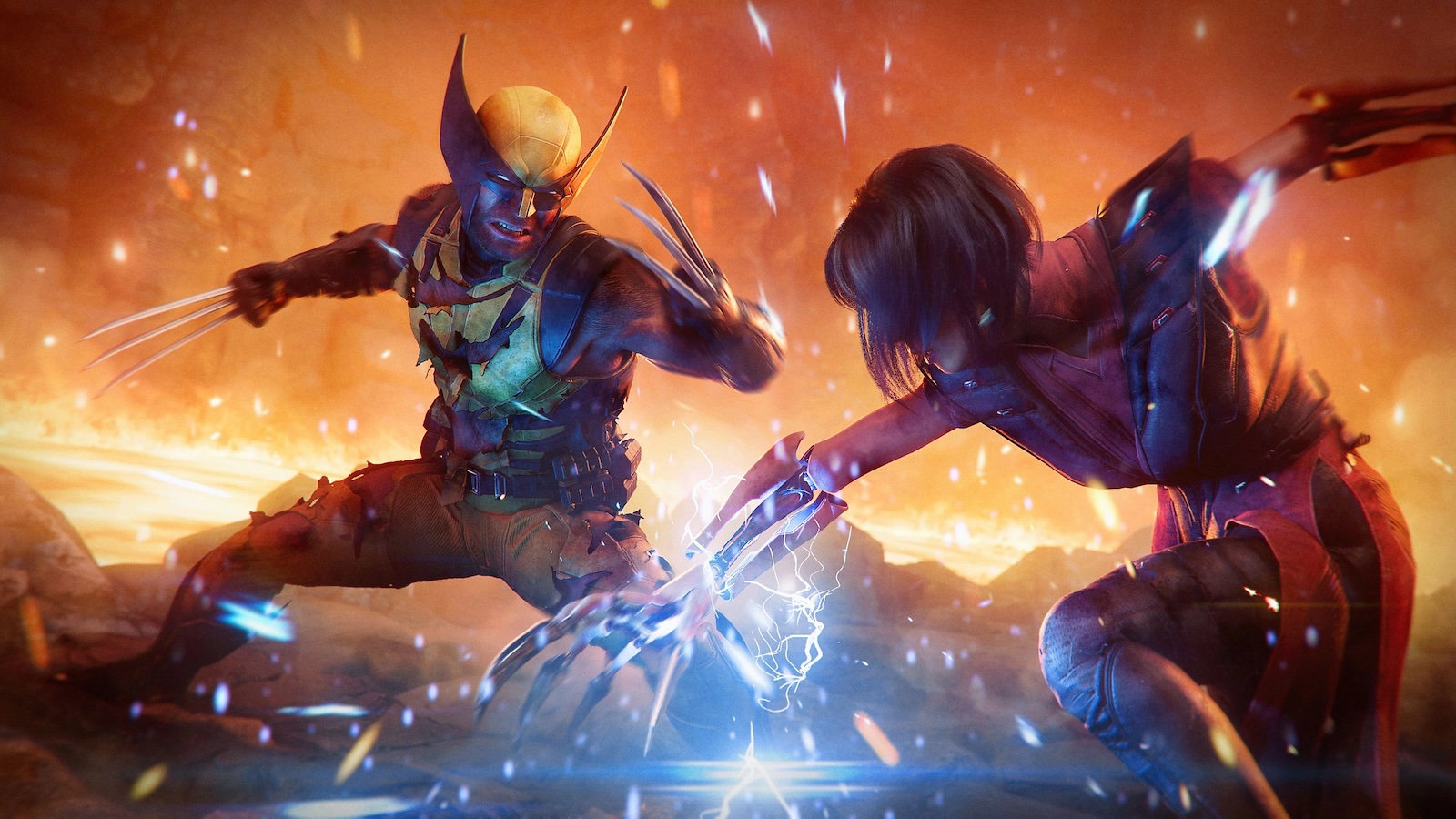
I thought the combat was great.
Insomniac understood something fundamental about Wolverine, fighting as Logan should not feel clean.
Spider-Man dodges around enemies, launches people into the air and gracefully moves between targets.
Wolverine tears through them.
The claws feel dangerous. Logan takes visible damage. Enemies can be dismembered. His healing factor allows the game to put him through punishment that would look ridiculous with almost any other superhero.
The combat encourages aggression, which fits the character perfectly.
The Verge similarly praised the Wolverine specific nature of the combat, particularly the way Rage rewards players for staying aggressive rather than sitting back and playing safely. Game Informer also singled out the brutal efficiency of Logan's fighting as one of the game's greatest successes.
Other critics were less convinced.
TechRadar thought the fighting lacked enough meaningful depth, while The Guardian found the combat increasingly repetitive as the campaign continued.
I did not have that problem to nearly the same degree.
Could there have been more variety? Absolutely.
But I never reached a point where I stopped enjoying being Wolverine.
And for a Wolverine game, that is probably the most important test.
The Upgrade System Needed More
This is where my biggest gameplay complaint comes in.
The skill progression feels underdeveloped.
You earn new techniques and abilities throughout the game, but I never felt like the upgrade system gave me enough meaningful ways to build my Wolverine.
There is a foundation here. It just needed another layer.
I wanted more meaningful choices between builds, more abilities capable of noticeably changing my approach and more moments where unlocking something made me immediately want to test it.
Other reviewers noticed something similar.
GosuGamers argued that the skill tree expands Logan's combos but leaves relatively little room for players to meaningfully customize their preferred combat style. Inven Global similarly found that new skills rarely changed the fundamental combat loop enough as the game progressed.
That is exactly where I think Insomniac can improve in a sequel.
The combat itself is good enough to build on.
Now give me a progression system that lets me turn Wolverine into a monster in different ways.
The “Trails” Were Not That Bad
Another complaint I kept seeing involved the game's trails and traversal sequences.
I expected these sections to bother me after hearing people talk about them.
They really didn't.
Are they the strongest parts of Wolverine? No.
Would I buy a standalone Wolverine Hiking Simulator? Also no.
But I never felt like these sections damaged the experience enough to become a major criticism.
They give the game room between its violent encounters and allow the story to breathe.
Not every minute needs Logan turning somebody into several smaller people.
Some critics found exploration outside the main route dull, particularly when hunting collectibles, and I understand that argument.
I just did not find the traversal bad enough to become the problem some players made it out to be.
The Ending Goes Somewhere Much Bigger
MAJOR STORY SPOILERS FROM HERE
The ending is where Marvel’s Wolverine becomes much more interesting.
Throughout the story, Logan is slowly reconstructing his past.
Eventually we discover the bigger truth, Logan once served Apocalypse as Death, one of his Four Horsemen.
Jean Grey ultimately has to use the Phoenix Force to remove Apocalypse's influence from Logan.
She succeeds.
But there is a cost.
The process destroys most of the memories Logan spent the game recovering, including his memories of his history with Jean.
Logan survives, but he essentially has to begin searching for himself again.
I can understand why that decision is controversial. Players spend the game recovering Logan's memories only for the finale to strip much of that progress away.
Some players have already criticized that choice for exactly that reason.
But what really caught my attention was what happens afterward.
That Cliffhanger Changes Everything
Do not turn the game off when the credits begin.
The standard post credits scene shows Sabretooth discovering another Helix Engine while still hearing Apocalypse's voice.
And then we get the image that matters.
Apocalypse is still here.
The game does not confirm a sequel or officially establish a complete Four Horsemen lineup, so we should not jump beyond what Insomniac actually shows. But the implication is obvious enough to leave Wolverine's world in a much more dangerous position than where it started.
There is also a second post credits sequence tied to completing the Nightmare Door challenges, which provides additional context surrounding Logan and Jean's history.
That ending is exactly why I want to see Insomniac continue this story.
We started with what looked like a relatively contained Wolverine adventure and ended with Apocalypse, the Horsemen mythology and the foundations for a much larger mutant world sitting on the table.
That cliffhanger did its job.
I want to know what happens next.
Final Verdict
Marvel’s Wolverine is a good game that occasionally feels like it is standing one upgrade away from becoming a great one.
The combat delivers the violence and aggression I wanted from Wolverine. The story was my favorite part, even though I predicted one of its biggest villain developments early and thought the campaign ran longer than necessary.
I also think Insomniac made the correct decision by keeping the game linear.
Wolverine does not need an enormous map filled with repetitive side activities simply because Spider-Man had one. The focused structure fits Logan and allows Insomniac to move him between locations while controlling the story.
Where the game falls short is depth.
The upgrade system needed more meaningful progression, and the campaign could have trimmed some sections without losing anything important.
But those issues never stopped me from enjoying the game.
The combat feels like Wolverine. The story gives this version of Logan somewhere interesting to go. And that ending leaves Insomniac with some extremely interesting possibilities for the future.
Marvel’s Wolverine did not completely blow me away.
But it gave me a Wolverine game I genuinely enjoyed and left me wanting to see where this universe goes next.
That's enough to earn a recommendation.
OTSPress Rating: 7/10
Good. Brutal. A little overlong. And hopefully only the beginning.
Sources
- https://www.playstation.com/en-us/games/marvels-wolverine/
- https://blog.playstation.com/2026/09/14/marvels-wolverine-developers-discuss-capturing-the-essence-of-logan-out-september-15/
- https://gameinformer.com/review/marvels-wolverine/relentless-momentum
- https://www.techradar.com/gaming/marvels-wolverine-review
- https://www.gamesradar.com/games/action/marvels-wolverine-review/
- https://www.theverge.com/games/992937/wolverine-review-ps5
- https://www.gosugamers.net/entertainment/news/79117-review-marvels-wolverine-sees-insomniac-deliver-a-satisfying-x-men-remix-with-middling-combat
- https://kotaku.com/marvels-wolverine-post-credits-scene-sabretooth-apocalypse-2000734385